Gūdu Cliffs
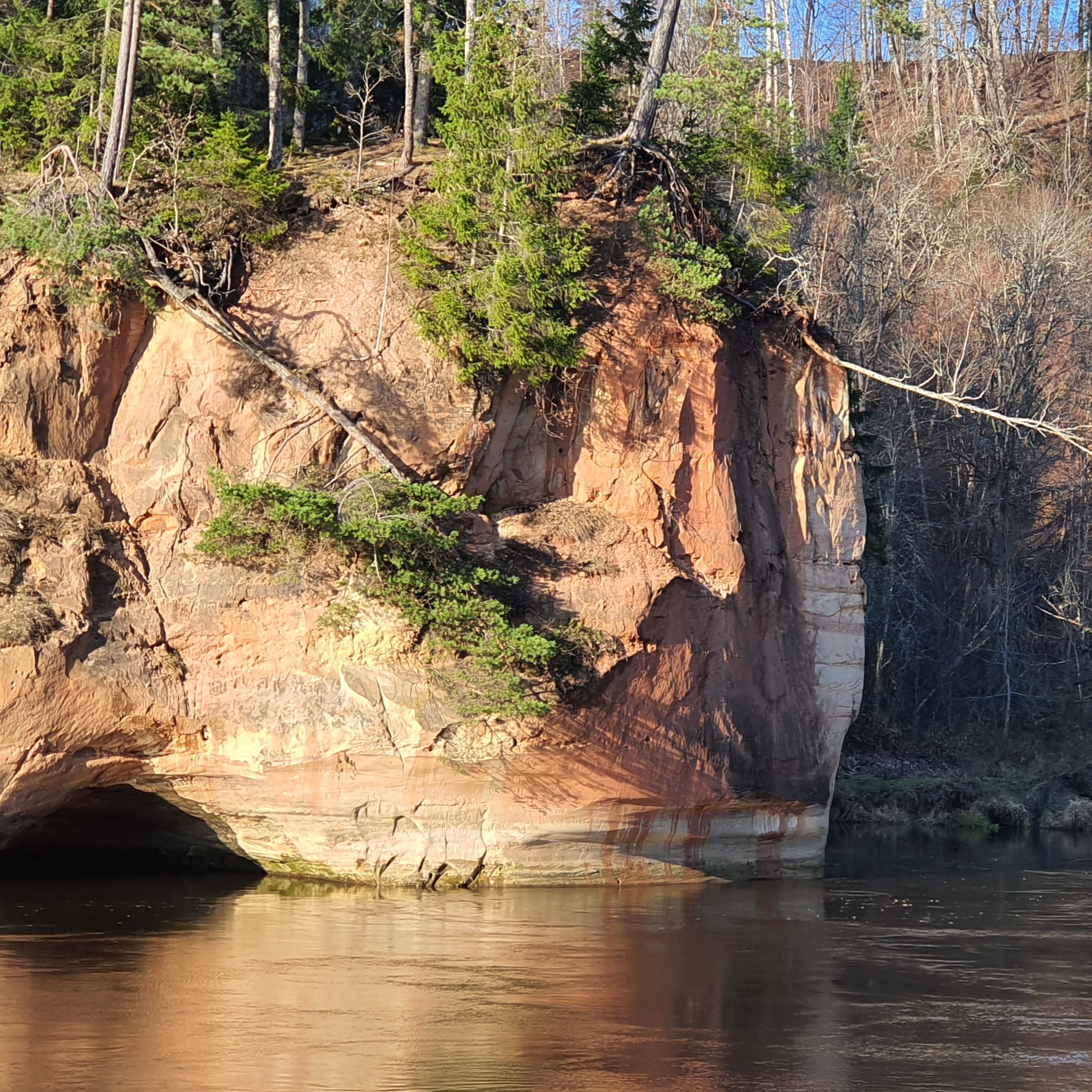
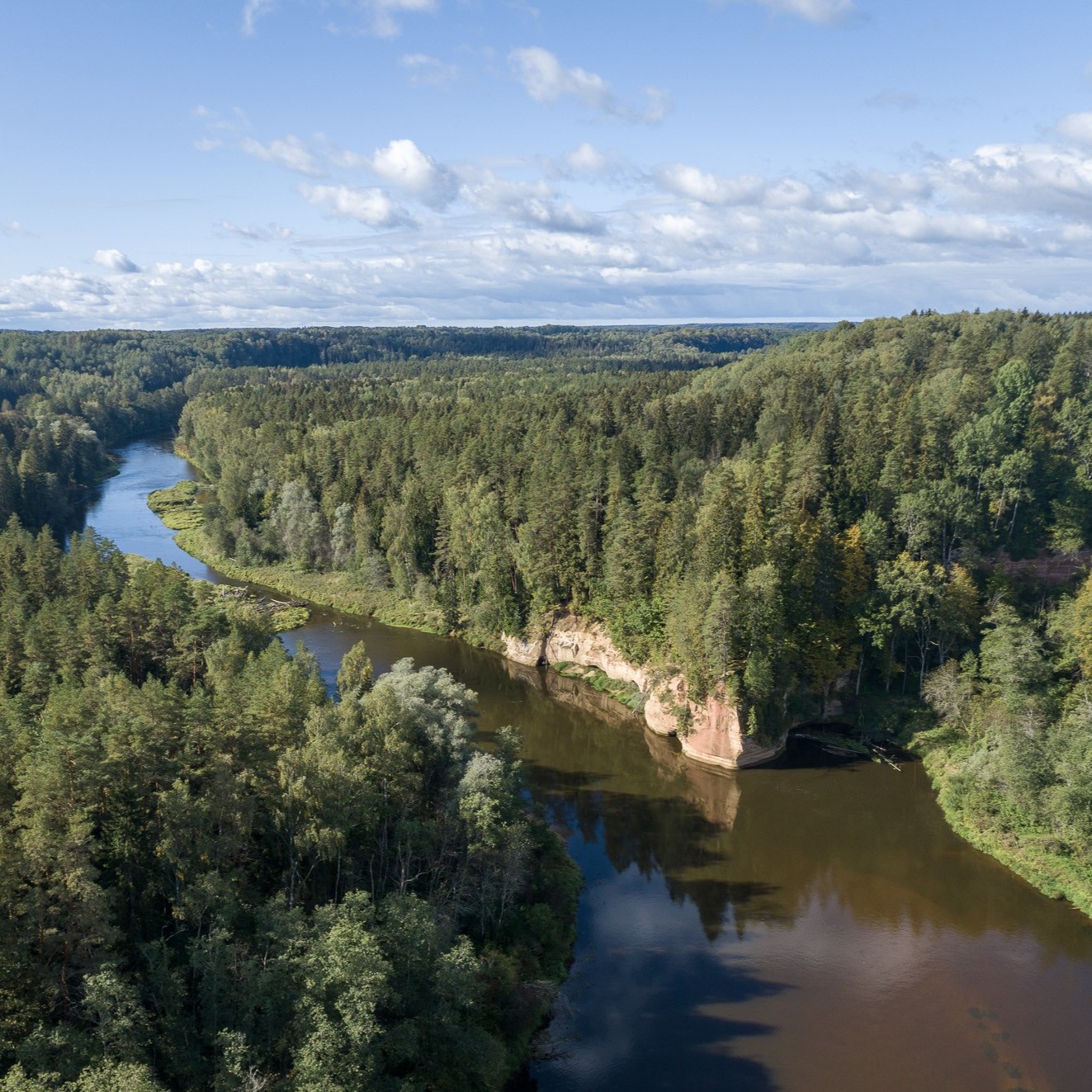
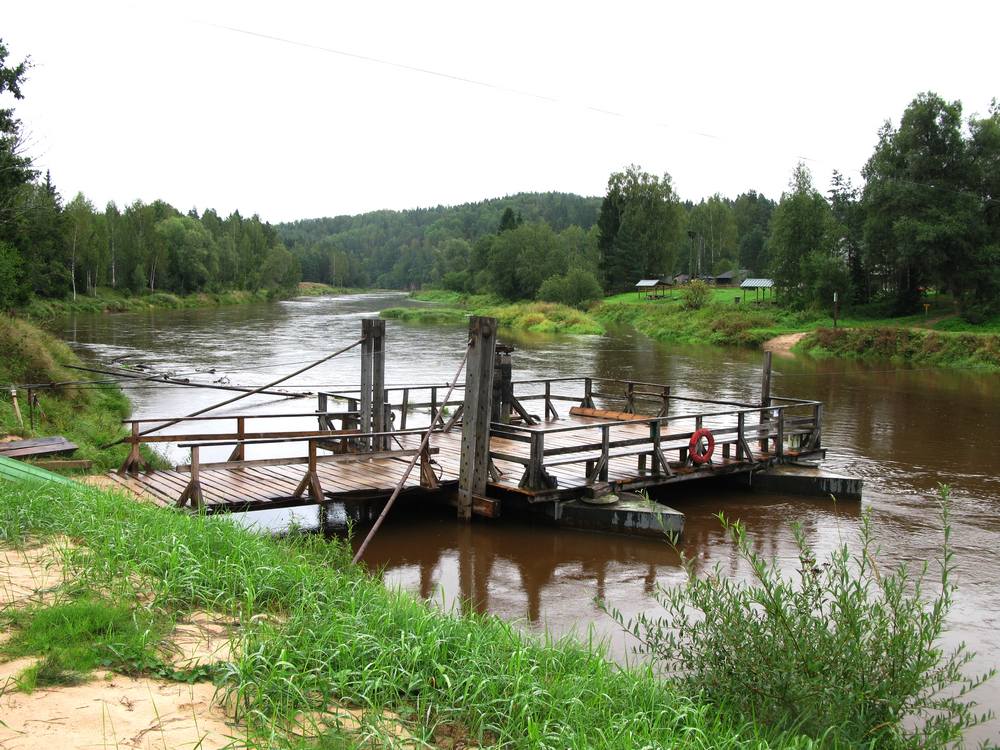
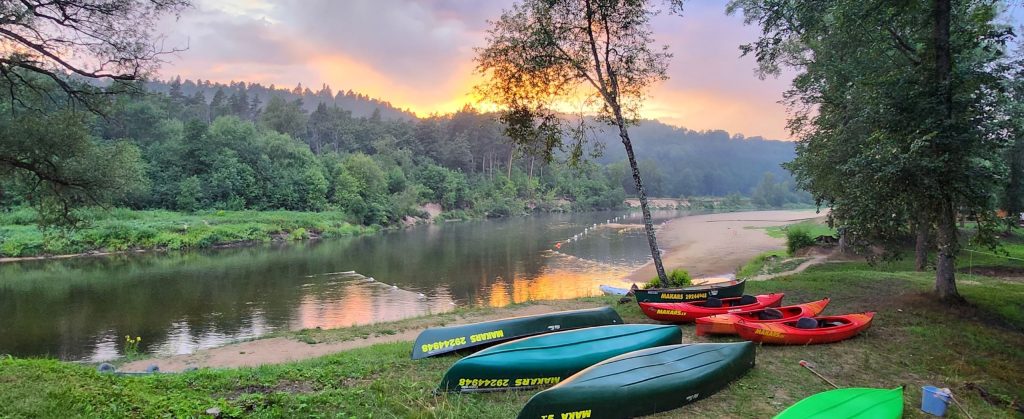
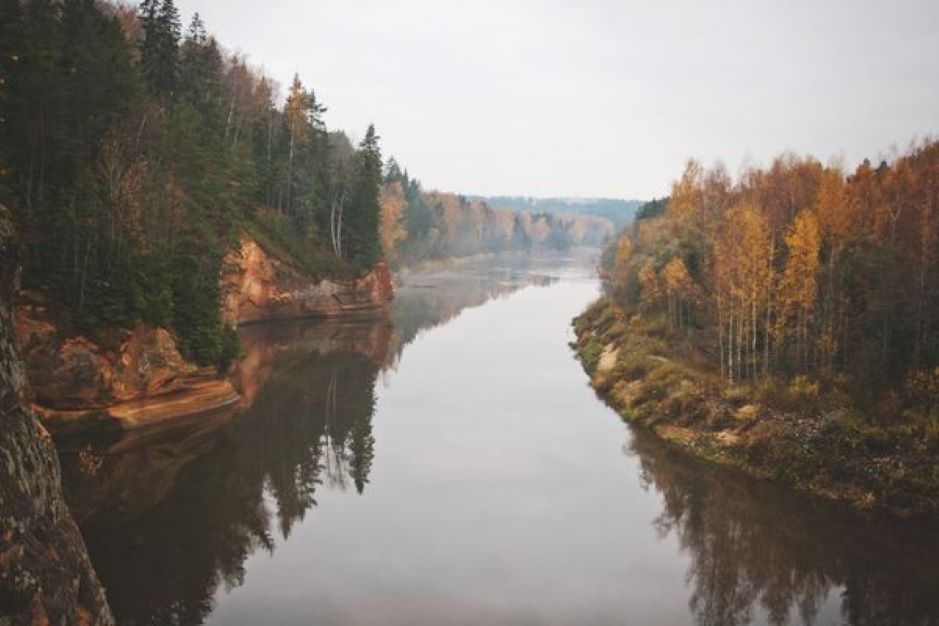
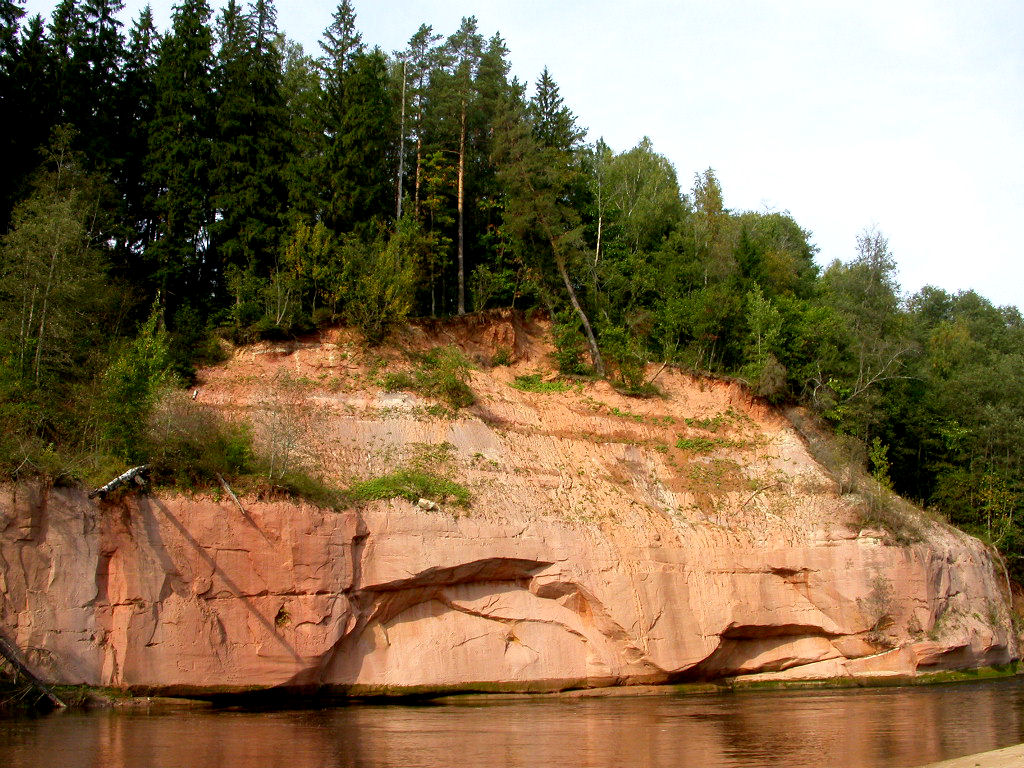
The Gūdu Cliffs rise dramatically from the Gauja River, resembling a mighty ship or iceberg splitting the current into a fast-flowing stream and a tranquil basin dotted with sly whirlpools. Reaching 18 metres in height and flanked by a 50-metre slope, this sandstone outcrop stretches 390 metres—making it one of the largest formations not only in Latvia but across the Baltic region.
Along the southwestern wall near the waterline, you’ll find a 4.5-metre deep and 6-metre wide niche carved into the rock. The cliffs are rich in paleontological finds, featuring fossils of placoderms, acanthodians, jawed and jawless fish, and phosphorite concretions dating back to the Devonian period.
Known by several names—Tālskatu Klintis (Panorama Cliffs) and Gaviļu iezis (Cliff of Rejoicing)—the site echoes with history and legend. In earlier days, the surrounding floodplain was used for pasture, and shepherds’ cheerful songs rang across the valley, giving the cliff its musical name. The view from its summit still earns it its panoramic title.
Local folklore tells of a miserly landowner from nearby Gūdu homestead who allegedly promised his soul to the devil. He was dragged—along with his sack of coins—into the deep whirlpool at the base of the cliff. To safely pass that treacherous bend, rafters would toss silver coins into the water. In case of drowning, a ritual involved floating bread with a lit candle; the location where the flame extinguished marked the place to search for the missing soul.
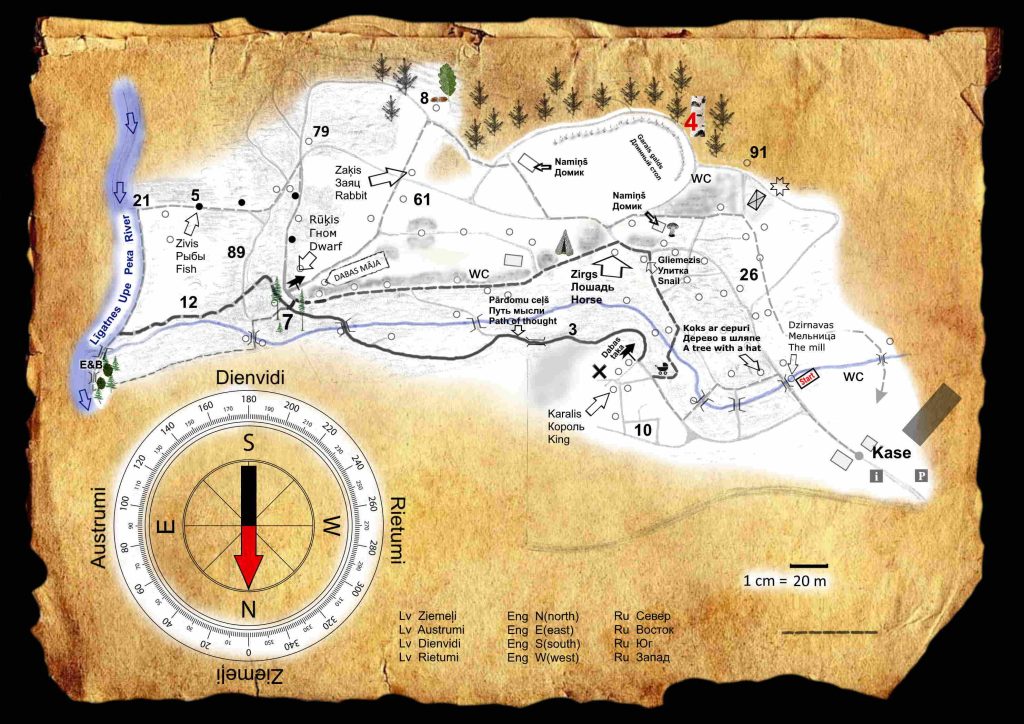
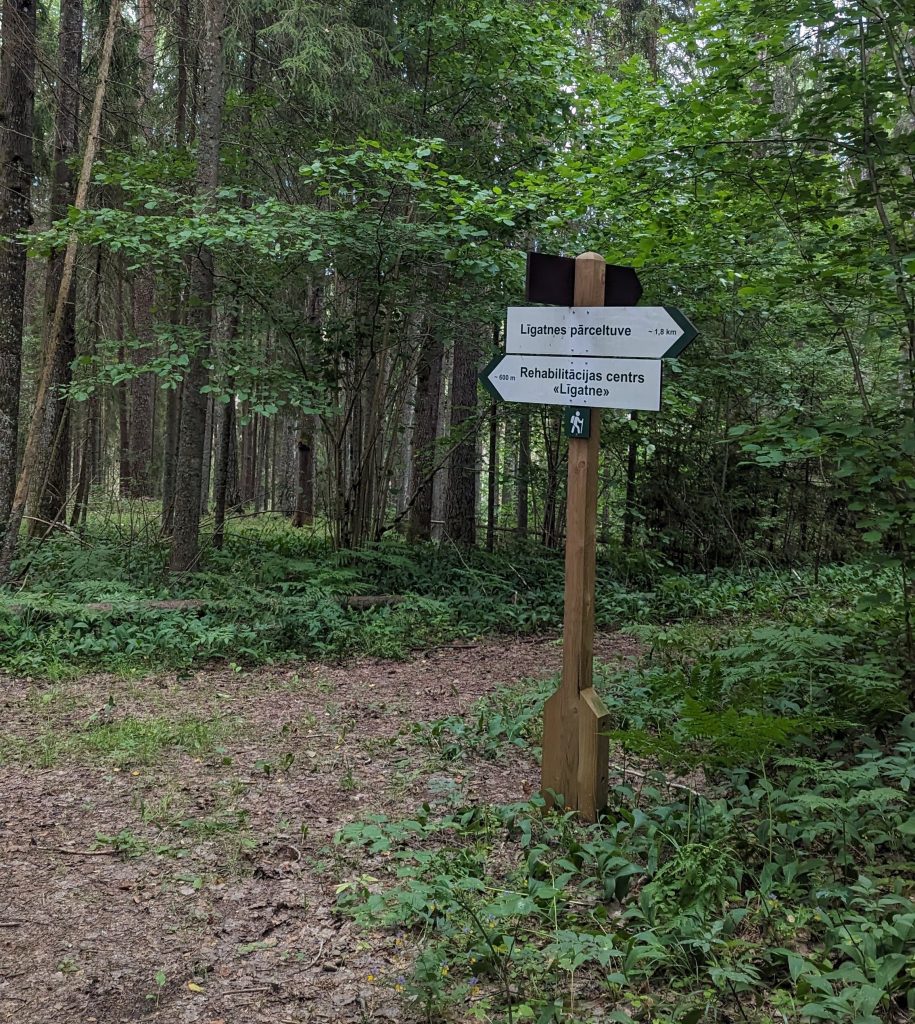
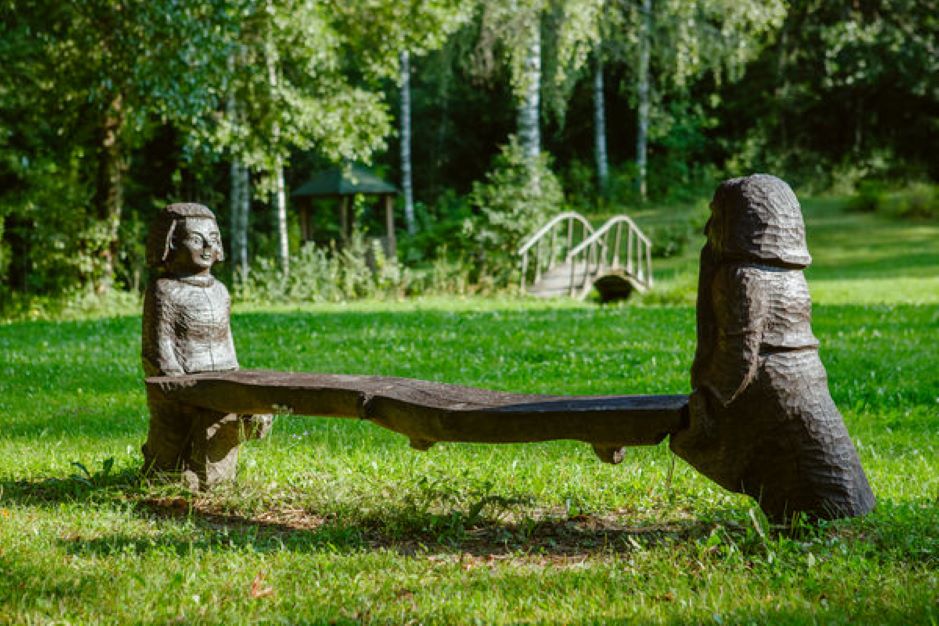
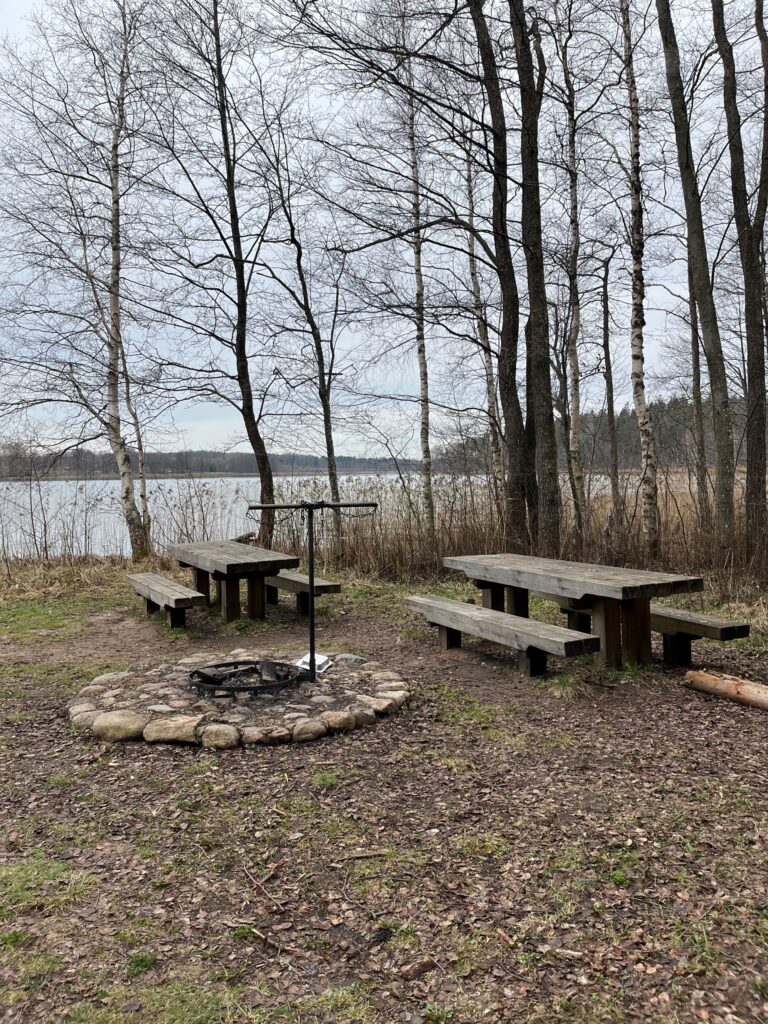
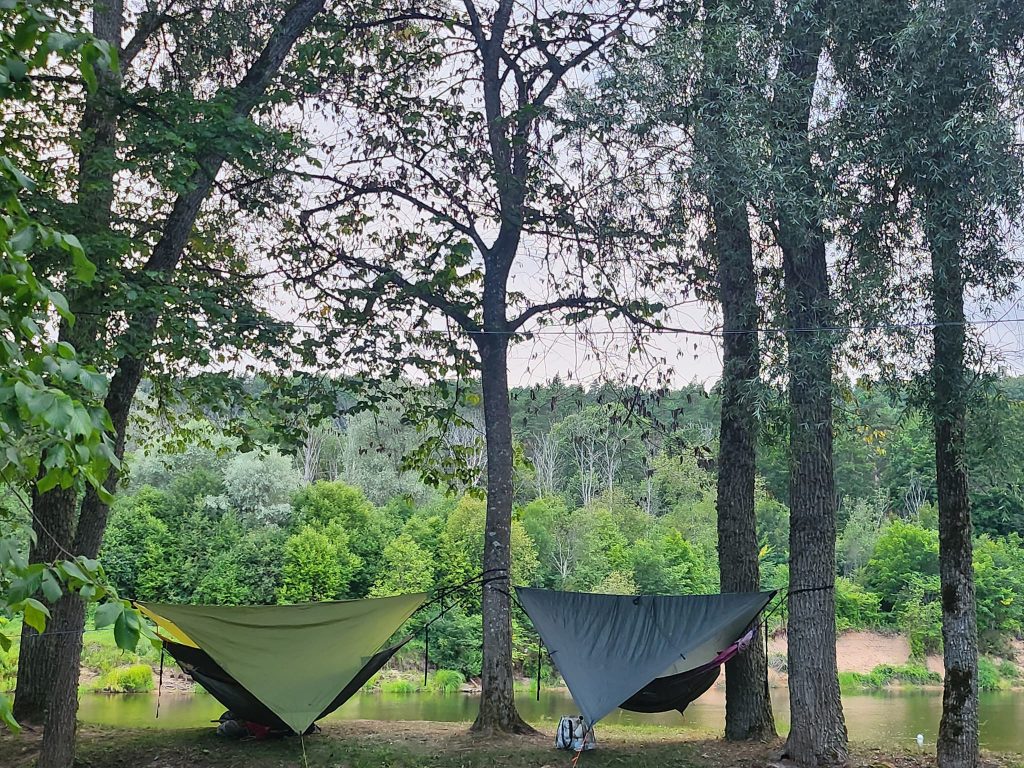
On the left bank of the Gauja, opposite the cliffs and near the Līgatne Nature Trails, visitors will find picnic areas with benches, fire pits, and tables. More scenic rest spots are dotted along the forested stretch between Jumprava Rock, Katrīna Rock, and Gūdu Cliffs.