Legends about the Great Ellīte Cave
The Liepa Great Ellīte Cave, also known as the Devil’s Kiln, boasts a long-standing tradition of tourism. Once, its wall bore a scratched-in date from the 16th century — unfortunately destroyed already in 1860. In 1864, pastor Ludvigs Hērvāgens described it as follows:
“In this cave, just as in the Turaida cave, many people have inscribed their names and the year when they visited. The very first inscription was made around the year 1500, that is, some 300 to 400 years ago. Four years ago, some fool even carved the year 1300. But Liepa’s innkeeper had seen inscriptions that were already 300 to 400 years old some 50 years earlier, and even old folks back then used to say that the markings were truly ancient. In summer, many visitors come to see the cave. Even Russian gentlemen and Estonians come, which shows that the cave’s fame reaches beyond Vidzeme.”
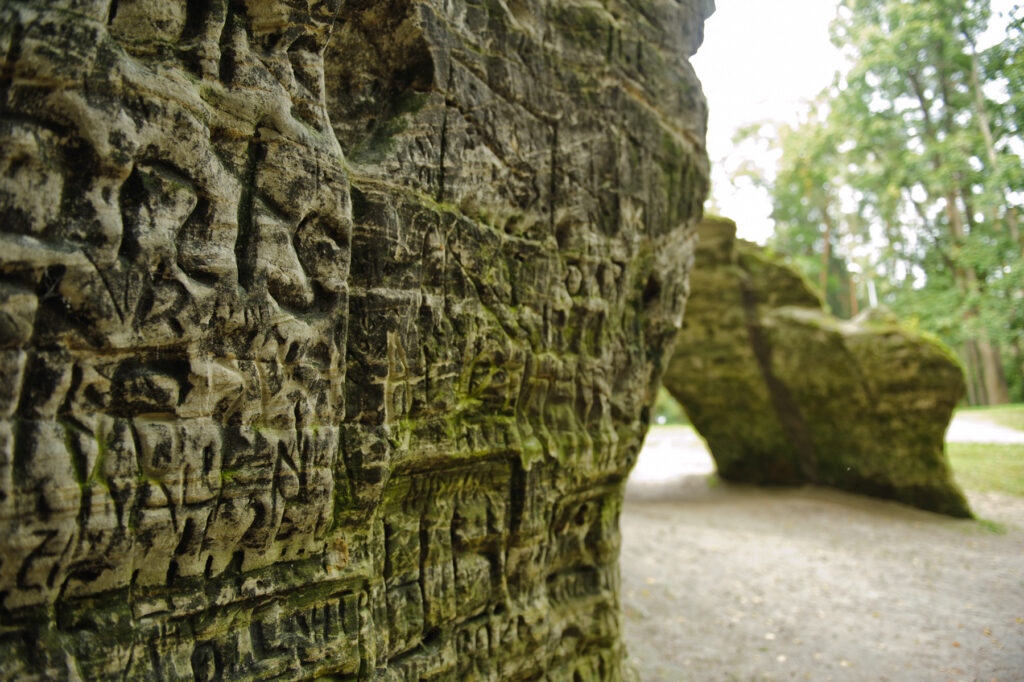
Another 19th-century traveller, who spent “more than an hour” examining Ellīte’s walls, claimed to have found inscriptions dating back to the 15th century! These examples prove that cave tourism traditions in Latvia go back at least half a millennium.
Latvian folk legends
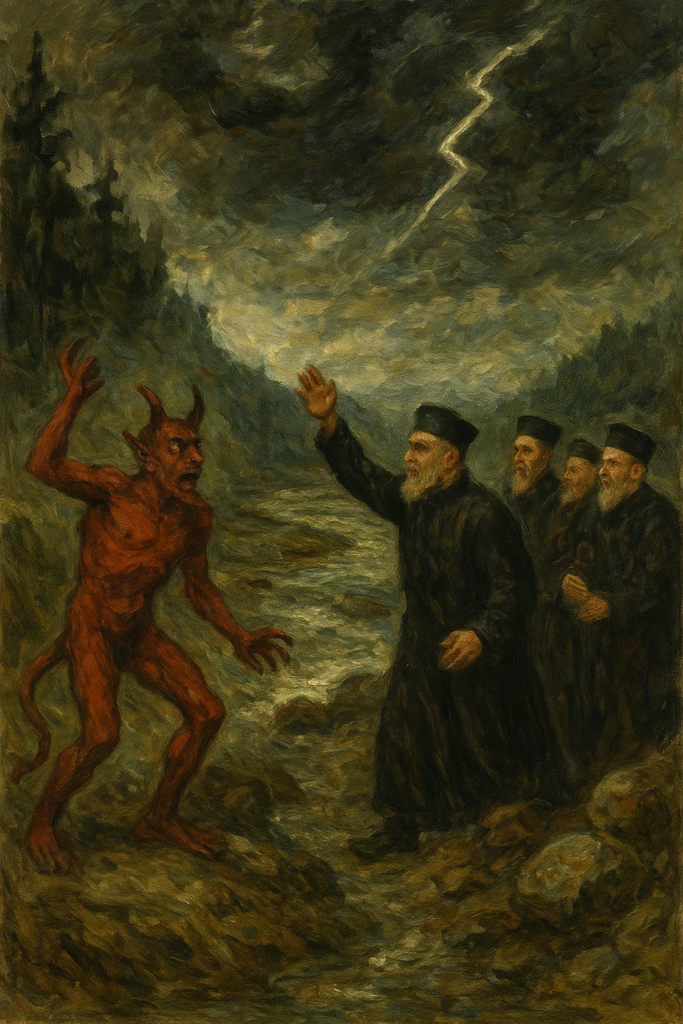
Once, the Devil himself lived in Ellīte, and priests tried to drive him from his lair. Nine priests failed because they had sinned much in their lives. The tenth nearly succeeded, but alas — he had once stolen an egg. So he, too, was a sinner. The eleventh might have succeeded as well, but he had once stolen a needle. Only the twelfth priest, being without sin, managed to expel the Devil from the cave.
The Devil leapt across the River Gauja towards Sietiņiezis. But the river blocked his path, so the Devil picked up boulders like turnips and hurled them into the riverbed. A fierce storm arose, and Thunder (Perkons) struck at the Devil — yet “he still dragged himself to Sietiņš.”
(Legend recorded in Liepa in 1953 by M. Zariņa, told by Jānis Gailis, aged 96.)
Photo: AI
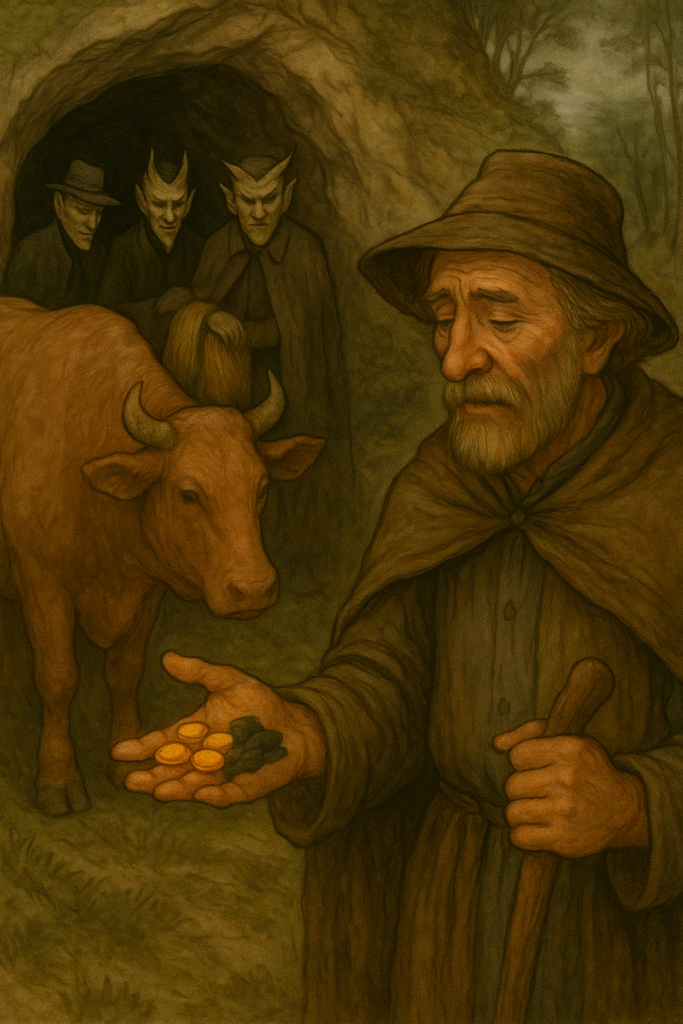
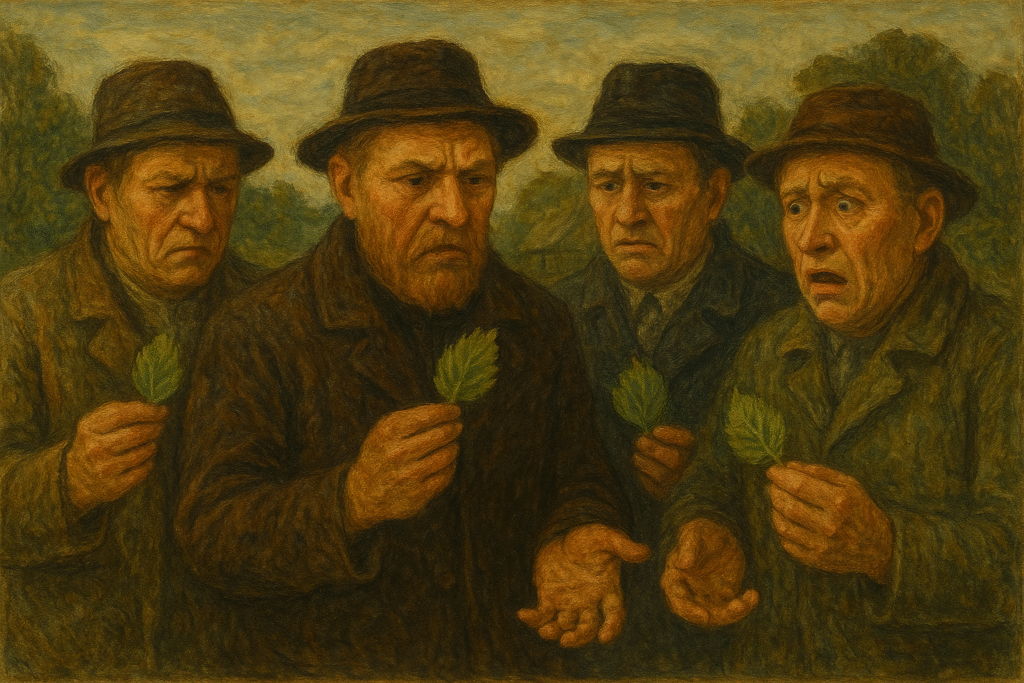
Near Liepa Manor, not far from Cēsis, there is a large cave known as the Devil’s Kiln, where devils were said to live. Disguised as humans, they would meet travellers on the road and buy cattle, flax, and anything else the travellers were taking to market — paying good money. But as soon as a person reached home, the devil’s money would instantly turn into charcoal.
(Legend recorded in Mēri, Valka district, from Augusts Kārkliņš, aged 59.)
Photo: AI
Long ago, the Devil lived in the Great Ellīte Cave in Liepa parish. Every day he sat by the roadside, mending his bast shoes with a sleigh shaft. When traders travelled to market to sell cows, the Devil would buy the cows and pay in cash. But once the traders returned home, they would find only birch leaves in their pockets instead of money. Later, devout people summoned twelve priests to banish the Devil from the Great Ellīte Cave. When the priests arrived and entered the cave, the Devil panicked and fled to the Little Ellīte Cave in three leaps. Wherever his feet struck the ground, deep pits remained, which can still be seen to this day.
(Sandis Laime, Sacred Underground: The Folklore of Latvian Caves, 2009)
Photo: AI
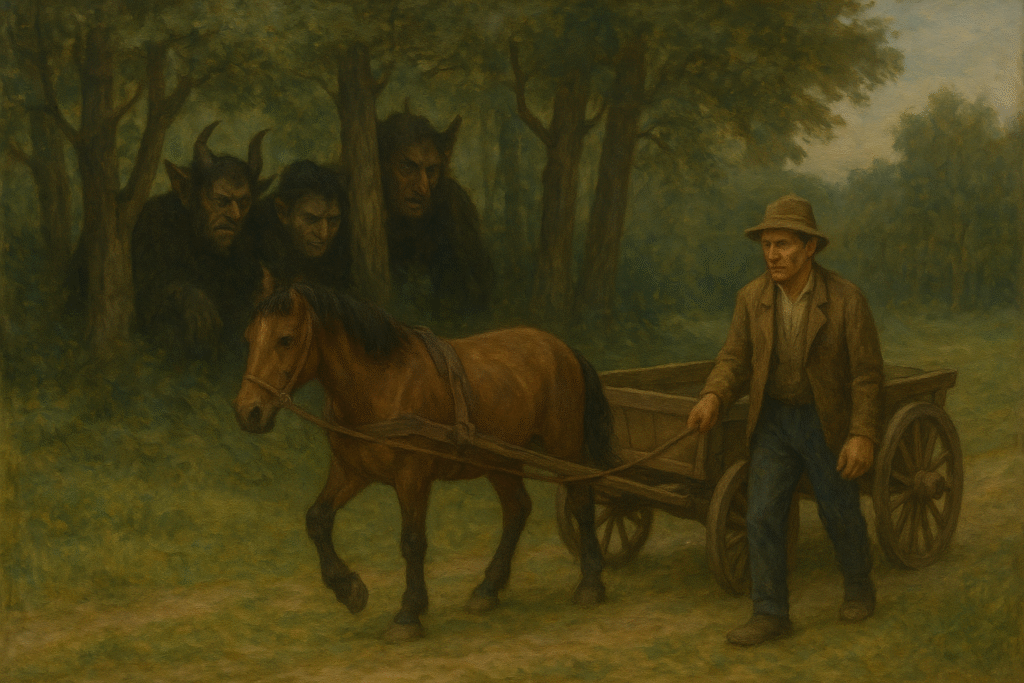
In Liepa parish, Ellīte was said to be the Devil’s dwelling. People claimed to have seen figures with the legs of a rooster, a cow, or a horse. It is said that in earlier times robbers (burlaks) lived there, who disguised themselves in various ways — with horns, large ears, and other strange features — to scare people and keep them away. The robbers were said to live in hidden chambers.
(Sandis Laime, Sacred Underground: The Folklore of Latvian Caves, 2009)
Photo: AI
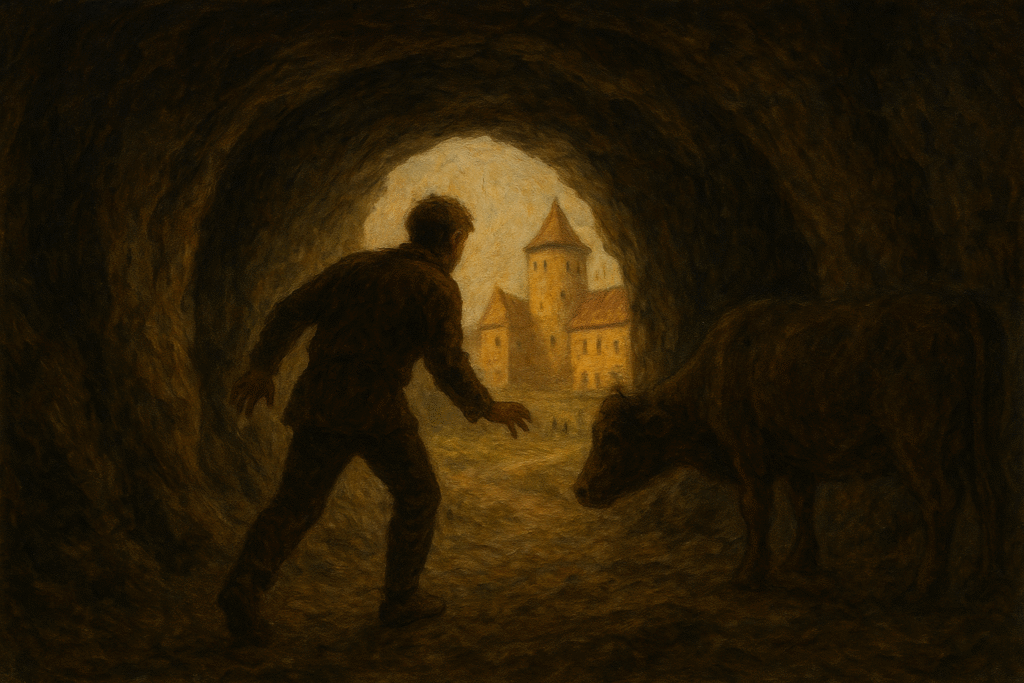
Stories tell of an underground passage from the cave leading to a German baron’s castle in Cēsis. Once, a brave young man decided to test whether the passage truly led to the castle. He entered the cave but was never seen again. Later it was said that he had been beaten so severely in the castle courtyard that he died. Since those times, the cave has been called the Great Ellīte.
(O. Āboltiņš, G. Eniņš, The Gauja Valley, 1979)
Photo: AI